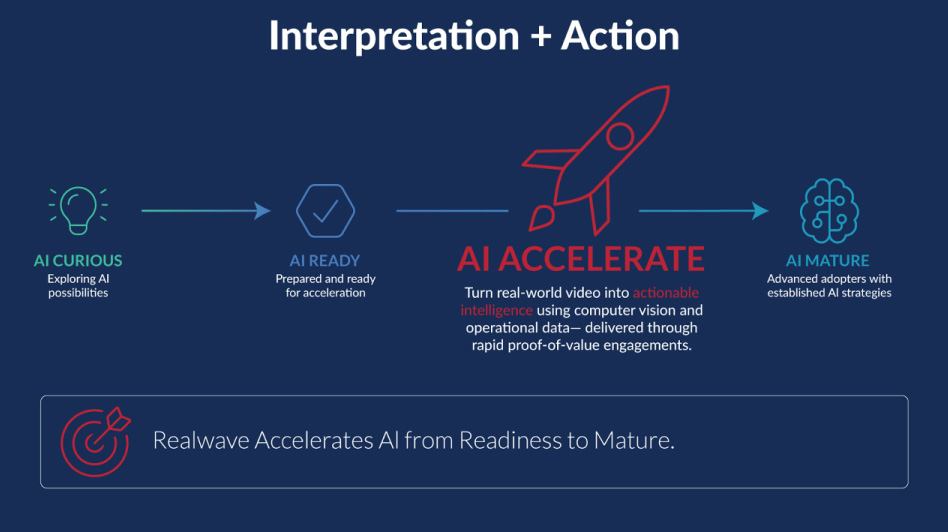



For many organizations, the challenge with AI adoption is no longer just implementing the technology, it’s turning its use into measurable business outcomes.
Collecting data with AI is only the beginning. Real value emerges when organizations operationalize AI by transforming raw data into actionable insights that drive better decision-making across the enterprise. As we look ahead, the adoption of agentic technologies will further scale these capabilities, enabling teams to execute strategic initiatives more effectively.
“AI is exceptional at generating data,” says Maria Smith, Strategic Solutions Architect at Bailiwick. “The real opportunity is converting that data into meaningful intelligence that helps organizations make faster, better-informed decisions. That’s where operational AI creates lasting value.”
Many AI initiatives start with targeted capabilities, such as counting people entering a store or tracking access to restricted areas. While these functions deliver value, they often generate large volumes of raw information without providing meaningful context or next-step guidance. Operational AI bridges this gap.
Rather than simply reporting how many customers entered a location, operational AI can identify peak traffic periods, compare customer volume against sales performance, measure staffing effectiveness, and detect operational trends across multiple sites. Instead of relying on employees to manually gather and analyze this information, AI automates the process and delivers timely, actionable reports.
“Think of operational AI as a virtual manager,” Smith explains. “It continuously analyzes data, identifies exceptions, and surfaces insights that matter. Without AI, gaining these perspectives would require significant manual effort. Operational AI allows teams to spend less time collecting information and more time acting on it.”
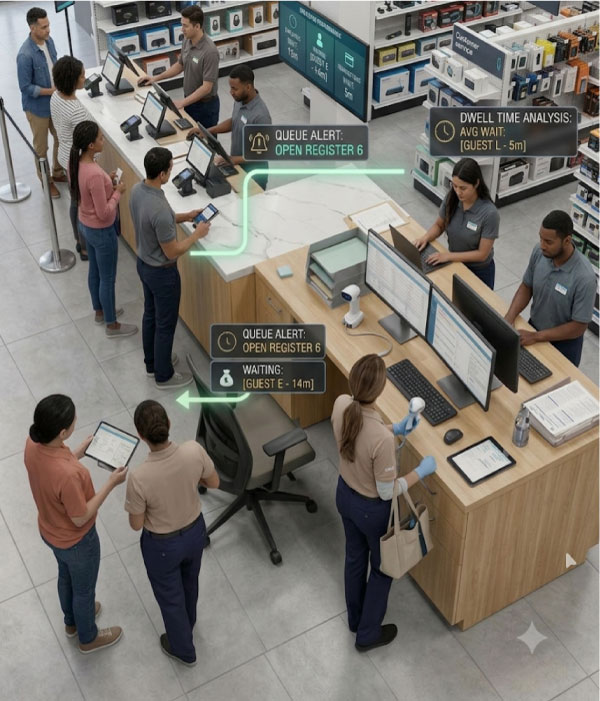
An example of how video AI could be used to analyze real-time customer traffic.
Building the Right Foundation
Operational AI is not a one-size-fits-all solution. Every organization has unique priorities and operational challenges. That’s why developing a clear roadmap before implementation is essential.
Organizations see the best results when they take time upfront to establish expectations, prioritize initiatives, and identify which projects will deliver the greatest value first. “AI should be treated like any strategic investment,” Smith notes. “When you define the scope, establish priorities, and understand your desired outcomes before deployment, you create a much stronger foundation for long-term success.”
Looking forward to the next 12-24 months, organizations that successfully operationalize AI today will be best positioned to adopt more advanced agentic systems. These evolving technologies will build upon strong operational foundations to automate complex workflows, adapt to changing conditions, and scale decision-making across the business.
By focusing first on operationalizing AI, turning data into intelligence and intelligence into action, companies can achieve the measurable ROI that has eluded many early initiatives. The path forward starts with a thoughtful foundation and a commitment to moving from data collection to operational excellence.
Operational AI is a Journey
At ePlus Bailiwick, we help organizations move beyond experimentation by operationalizing AI through integrated solutions that connect video, access control, digital locks, analytics, and intelligent workflows. The result is a smarter and more secure operation that helps companies improve productivity and protect critical assets.
Starting your AI journey is as easy as contacting a Bailiwick representative to discuss your needs. That first consultation can send your company on a successful AI journey.