For decades, loss prevention (LP) has operated in a fundamentally reactive mode such as reviewing footage after incidents, building cases retroactively, and responding only once theft has occurred. That model is rapidly becoming obsolete. Today, artificial intelligence (AI) is redefining LP by shifting the focus from incident response to real-time detection and intervention. Through advanced analytics, computer vision, and data fusion, AI is enabling retailers to identify risks as they emerge, prioritize high-value actions, and dramatically reduce operational inefficiencies.
“AI is eliminating dark data and transforming video surveillance into decision-ready intelligence,” said John Sullivan, Account Executive at Bailiwick and an expert on AI deployment. “By fusing operational technologies with video, it provides context and enables proactive monitoring—so teams know exactly where to focus their time.”
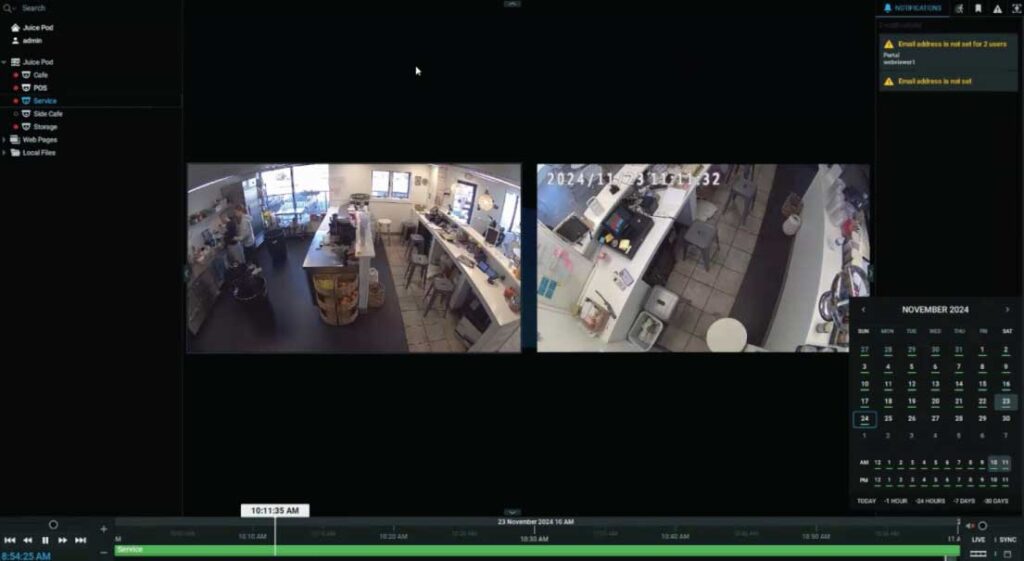
Traditional LP teams have long been overwhelmed by “dark data” (vast amounts of unreviewed video footage). In many cases, teams spent 60–80% of their time compiling evidence and only a fraction actually resolving incidents. AI flips that ratio.
Modern AI platforms ingest and correlate multiple data streams such as point-of-sale (POS) transactions, video feeds, access control logs, and inventory systems. These data streams are evaluated to identify relevant anomalies. Instead of manually scrubbing hours of footage, LP teams now receive real-time alerts tied to specific high-risk events.
For example, POS-video data fusion enables AI to instantly flag suspicious cashier behavior, such as excessive refunds, overrides, or discounts, and correlate those anomalies with video evidence. Major retailers have already deployed these capabilities to detect internal fraud patterns, achieving measurable reductions in shrink within months. The key shift: incidents are identified as they develop—not after the loss is realized.
Behavioral Pattern Recognition: Identifying Risk Before It Escalates
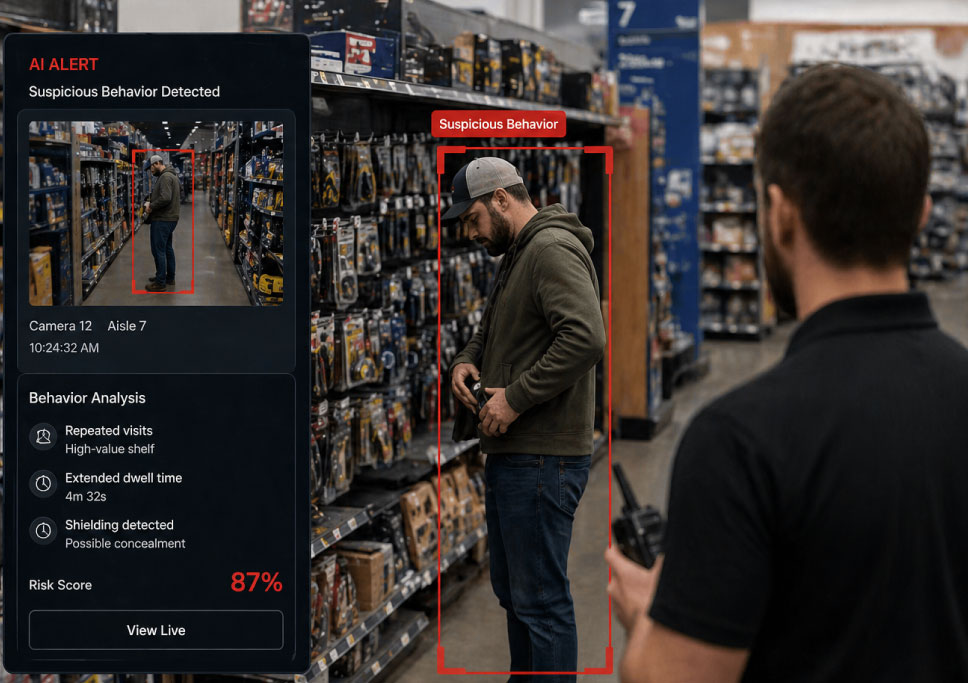
One of AI’s most powerful capabilities is behavioral pattern recognition. By learning what “normal” looks like (typical shopper flow, dwell times, and interaction patterns), AI can quickly identify deviations that signal potential theft.
These deviations might include repeated visits to the same high-value shelf, prolonged loitering in specific zones, or concealment gestures such as “shielding” movements.
Retailers implementing these systems are seeing significant results. In one documented case, a hardware store deploying AI-driven video analytics reduced shoplifting incidents by 50% within months. Staff were no longer reacting to theft, they were intervening in real time based on AI-generated alerts.
This represents a fundamental operational shift: LP teams are no longer passive observers; they are active participants in preventing loss as it happens.
Real-Time Identification of Repeat Offenders
AI-powered facial recognition and watchlist technologies are enabling retailers to identify repeat offenders the moment they enter a store. By matching individuals against known profiles, these systems trigger instant alerts, allowing teams to monitor or intervene before theft occurs.
Large-scale deployments have demonstrated measurable impact, with some retailers reporting up to a 20% reduction in shrinkage at high-risk locations, according to the NRF. More importantly, this capability moves LP upstream—deterring incidents before they begin rather than documenting them after the fact.
Sullivan underscores this evolution. “With AI identifying persons of interest in real time, loss prevention teams can shift from building cases to actively preventing them.”
Exceptional Technology Deployment.
Find out why companies trust Bailiwick for deployment of their large-scale digital technology initiatives.
Combating Organized Retail Crime with Cross-Site Intelligence
Organized retail crime (ORC) presents a more complex challenge, often involving coordinated groups operating across multiple locations. AI addresses this by connecting the dots between incidents that would otherwise appear isolated.
Using technologies such as automatic license plate recognition and cross-site data analysis, AI can track vehicles linked to prior incidents, identify coordinated group behaviors, and detect patterns across regions and timeframes.
This enables retailers to anticipate ORC activity rather than reacting store-by-store. When a flagged vehicle enters a parking lot, alerts can be triggered instantly to give store teams and local law enforcement time to prepare.
Securing the Point of Transaction
Self-checkout has introduced both convenience and new vulnerabilities. AI-powered computer vision is now being used to verify scans in real time, detecting issues such as unscanned items, intentional undercharging, and barcode switching.
Retailers deploying these solutions have reported shrink reductions of up to 35% at self-checkout, according to the NRF. The advantage is immediacy because theft is prevented at the moment of transaction, not discovered during audits days or weeks later.
Internal Theft and Employee Behavior Monitoring
Theft isn’t limited to external threats. Internal theft and policy violations can be equally damaging and often harder to detect. AI addresses this by analyzing employee behavior across multiple systems.
By correlating video, transaction data, and access control logs, AI can flag anomalies such as unusual after-hours activity, irregular register usage, or unauthorized stock movement. Instead of constant oversight, LP teams are presented with exception-based insights, allowing them to focus on true outliers rather than monitoring every action.