
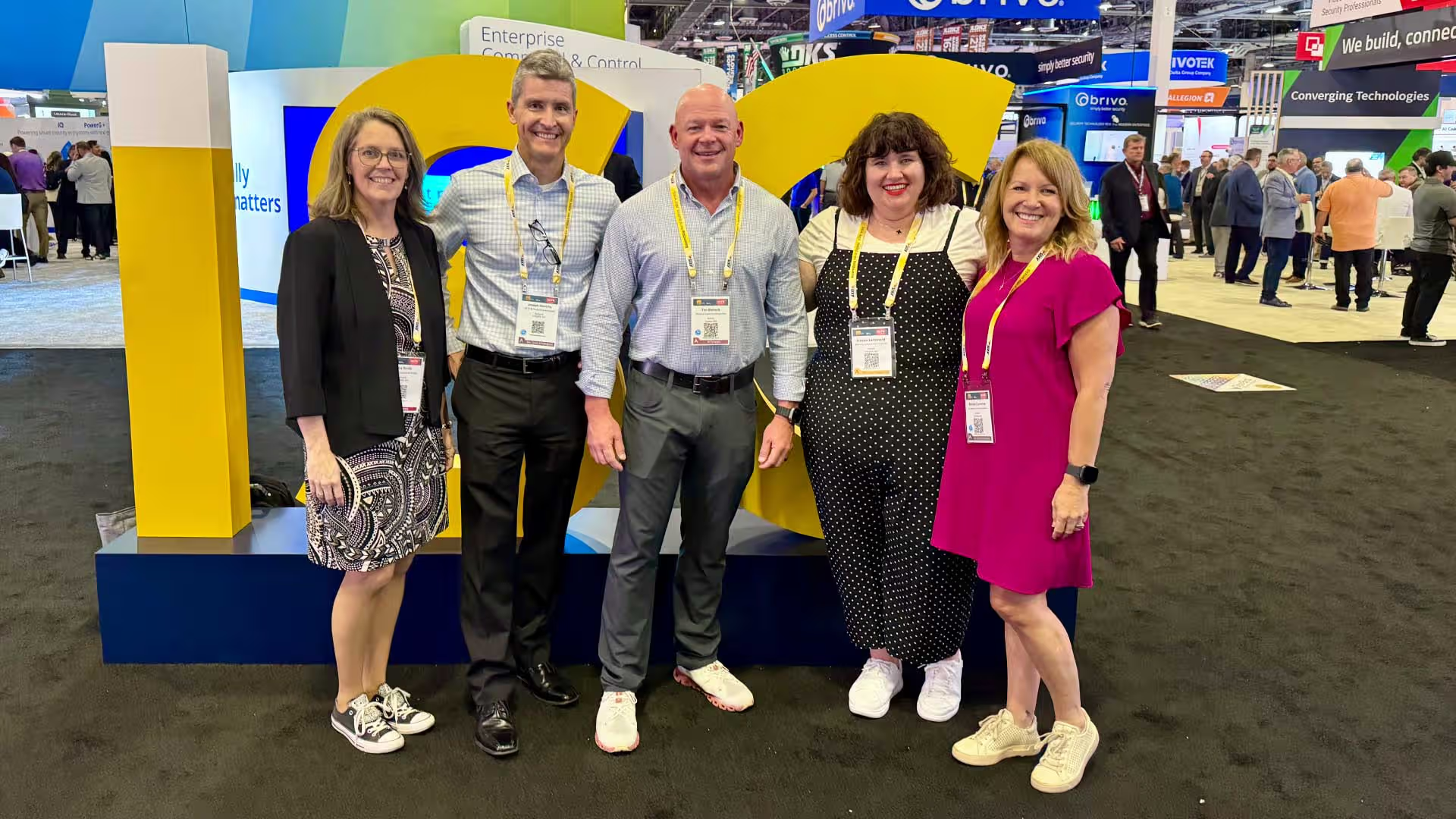
Each year, ISC West brings together tens of thousands of security professionals in Las Vegas to explore the technologies and strategies shaping the future of physical security, cybersecurity, and public safety. After attending this year’s conference (March 23–27), I came away with a clear perspective: the convergence of artificial intelligence with traditional security systems isn’t just evolving—it’s accelerating.
AI Is Now Core to Security Strategy
It wasn’t surprising to see AI everywhere at ISC West. What stood out to me was how deeply it’s now embedded into physical security solutions.
Across both the exhibit floor and educational sessions, vendors weren’t just talking about AI as a standalone capability. They’re actively integrating it into cameras, access control systems, and monitoring platforms to enhance detection, automate analysis, and improve response times.
To me, this signals a fundamental shift. We’re moving away from reactive security models toward environments that are increasingly proactive and intelligence driven.
Continued Momentum Around Digital Locks
I had the opportunity to connect with potential clients, and digital lock solutions were usually part of the conversation.
What stood out to me is how much more impactful these solutions become when they’re integrated into a broader digital intelligence platform. On their own, digital locks secure access. But when you layer in analytics and AI, they become part of a much larger system that drives both security and operational efficiency. That integration is where I see the real opportunity moving forward.
Exceptional Technology Deployment.
Find out why companies trust Bailiwick for deployment of their large-scale digital technology initiatives.
The Rise of Model Orchestration
Another trend that caught my attention was the way AI models are being developed and deployed. There wasn’t one single breakthrough technology that made me stop and say, “I’ve never seen that before.” Instead, what I saw was a deeper, more sophisticated approach to combining models. Different models were combined to orchestrate a solution.
For example, one model might identify a vehicle. Another determines that it’s a truck. A third recognizes that it’s pulling a trailer. Additional models can then analyze specific characteristics of that trailer.
Individually, those insights are limited. But when you layer them together, you get a much more meaningful and actionable output. That kind of modular, composable approach is incredibly powerful and it aligns well with how we build and integrate solutions for our customers.
A Dynamic and Expanding Ecosystem
From a broader industry standpoint, ISC West continues to highlight just how large and dynamic the security space has become.
The show floor was packed—long lines, crowded booths, and a wide mix of vendors. You have major players with large, highly visible presences, alongside a growing number of smaller companies introducing innovative technologies.
What’s interesting to me is how these solutions complement each other. You’re seeing traditional hardware—locks, cameras, gates—paired with increasingly sophisticated software and AI capabilities. That convergence is where the industry is headed.
The Importance of Meeting Customers Where They Are
I attended several sessions throughout the week, and like any conference, there was a range in depth and complexity.
Some sessions focused on foundational concepts, while others explored more advanced applications. That variation reflects the reality of where the industry is today—organizations are at different stages in their adoption of AI and modern security technologies.
From my perspective, that’s not a drawback—it’s an opportunity. It means there’s a real need for partners who can help bridge that gap and guide customers through the process.
Looking Ahead
If there’s one thing I took away from ISC West 2026, it’s this: the future of security is about intelligent integration. AI is becoming the connective layer that brings together physical infrastructure, digital systems, and human decision-making. The organizations that