

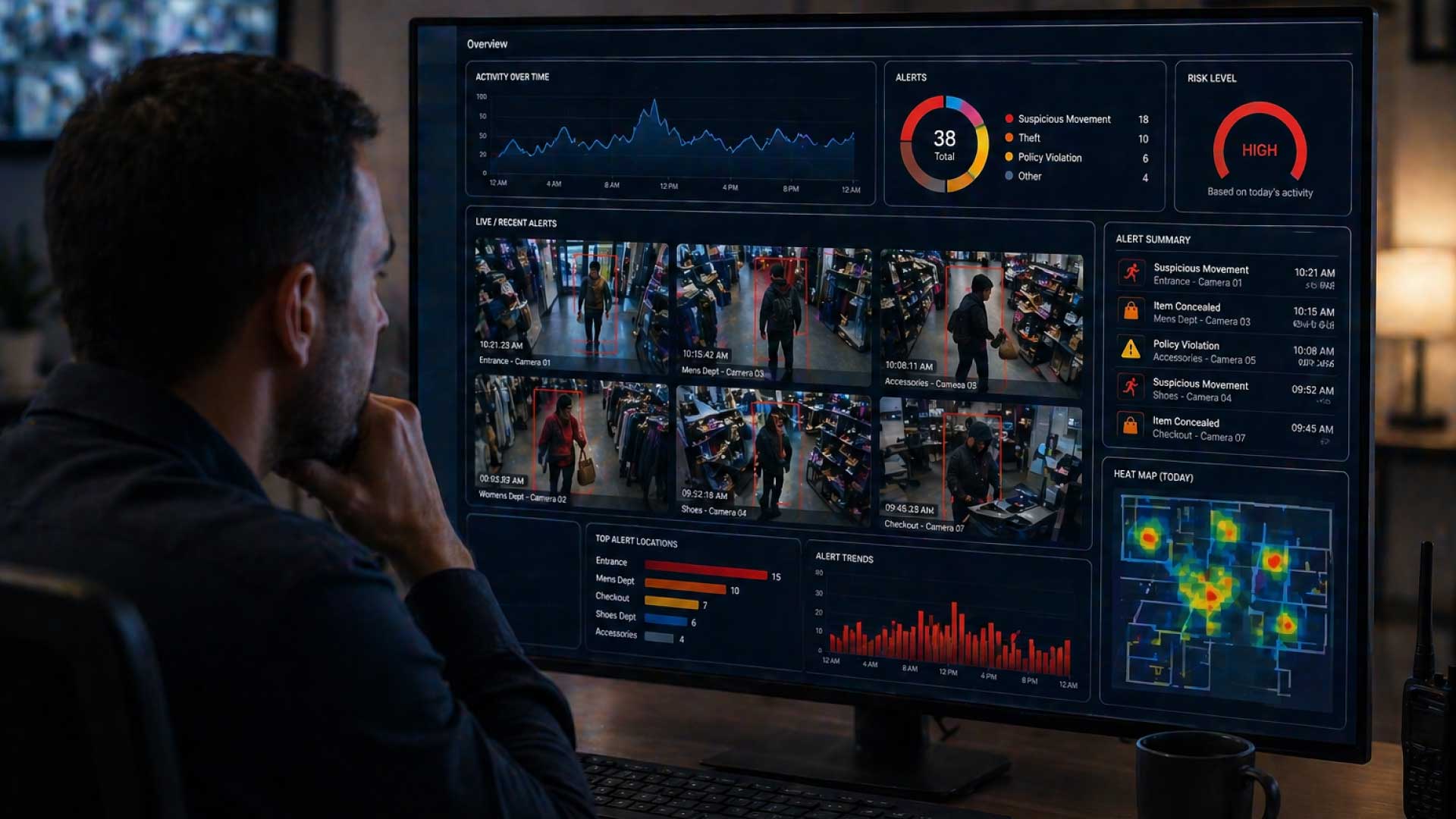
While real-time theft detection is transforming day-to-day loss prevention operations, the next evolution is already underway: prediction. AI is no longer limited to identifying incidents as they happen, it is increasingly capable of forecasting where and when theft is most likely to occur.
Predictive Analytics: Forecasting Risk Before It Happens
By analyzing historical and contextual data such as time of day, store location, product category, staffing levels, and seasonal trends, AI can identify patterns that precede shrink events. This allows retailers to move from reactive audits to proactive planning. Instead of responding to incidents, LP leaders can anticipate them and deploy resources accordingly.
With predictive analytics, retailers can:
Allocate staff more effectively during high-risk periods
Preemptively secure vulnerable product categories
Adjust store operations during peak shrink windows, such as holidays or staffing shortages
The result is a more strategic LP function that prevents loss before the conditions for it fully materialize.
Overcoming Adoption Challenges and Defining ROI
Despite its potential, AI adoption can be daunting. The pace of innovation and the breadth of available solutions often create decision paralysis for retailers.
“The biggest hurdle is knowing where to start,” states John Sullivan, Account Executive at Bailiwick and an expert on AI deployment. Retailers need to define what success looks like, whether that’s reducing theft, improving response time, or deterring specific behaviors, and then work backward from there.”
Establishing a baseline is critical. Without a clear understanding of current performance, measuring ROI becomes difficult. Retailers that succeed with AI typically begin with a focused use case such as self-checkout monitoring or POS exception reporting. Then they validate results, and scale incrementally. This phased approach minimizes risk while building internal confidence and operational alignment.
Exceptional Technology Deployment.
Find out why companies trust Bailiwick for deployment of their large-scale digital technology initiatives.
Privacy and the Role of Human Judgment
As AI becomes more pervasive in retail environments, privacy considerations remain front and center, particularly with technologies like facial recognition. Regulations vary by jurisdiction, requiring retailers to maintain strict compliance and transparency in how data is collected and used.
Equally important is the role of human oversight. “AI is not a replacement for judgment,” Sullivan notes. “It enhances decision-making by surfacing the right information at the right time, but ultimately, humans validate and act on those insights.”
This balance is critical. AI excels at pattern detection and anomaly identification, but human teams provide context, discretion, and ethical judgment.
The Future: Intelligent, Managed Loss Prevention
Looking ahead, AI in loss prevention will become more sophisticated and more tailored. Retailers will increasingly train AI models on their own data, enabling insights that reflect their unique store layouts, customer behaviors, and risk profiles.
At the same time, the complexity of these systems will drive demand for managed services. Intelligent video platforms, automated workflows, and integrated analytics ecosystems require continuous monitoring, tuning, and optimization.
“Within the next 24 months, intelligent video and analytics will become so advanced that retailers will rely on managed services to ensure performance, accuracy, and actionable reporting,” Sullivan summarized. This shift mirrors broader IT trends where organizations move from owning infrastructure to partnering with experts who manage and optimize it.
Conclusion
AI is not just enhancing loss prevention it is redefining it. By transforming raw data into actionable intelligence, AI enables retailers to move from hindsight to foresight.
The result is a more efficient, proactive, and effective LP strategy. AI will allow teams to spend less time searching for problems and more time preventing them. In an environment where margins are tight and risks are constantly evolving, that shift is not just beneficial—it’s essential.