When retailers plan a store remodel, the focus is often on visible improvements such as new fixtures, updated signage, refreshed layouts, or enhanced lighting designed to elevate the customer experience. But remodels also represent one of the most strategic opportunities to upgrade the technology infrastructure that powers the store.
Because construction crews are already on site and portions of the store are being reworked, technology upgrades can be completed far more efficiently than during normal operations. In most cases, this work is done during off-hours, allowing stores to remain open with no closures and minimal disruption. By aligning technology upgrades with remodel activity, retailers can modernize critical systems without incurring additional downtime or redundant labor costs.
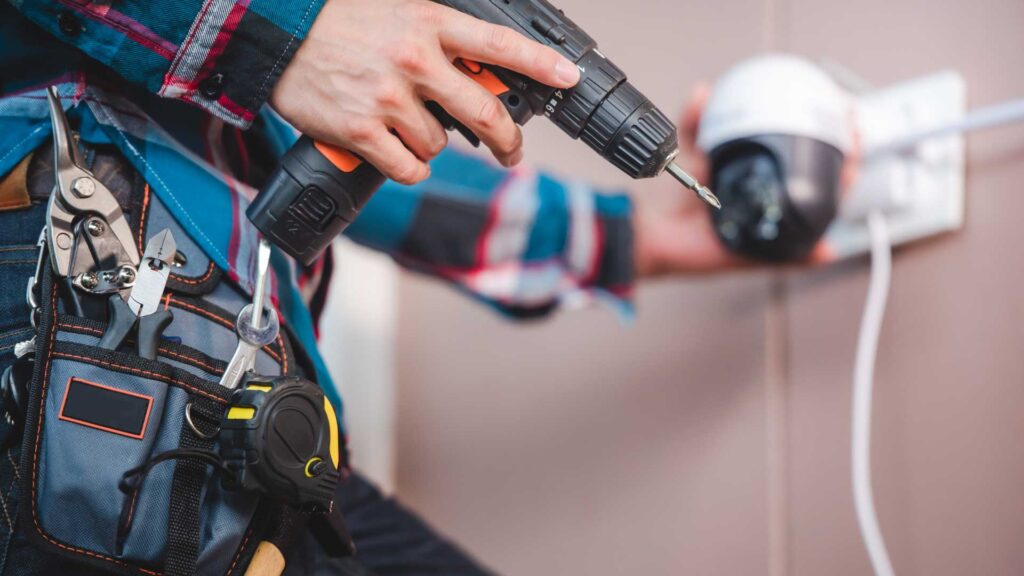
Bailiwick routinely supports Fortune 500 retailers during remodel programs, coordinating upgrades across point-of-sale systems, surveillance cameras, network switching, Wi-Fi and more. When planned correctly, remodels become a catalyst for modernization rather than a missed opportunity.
Smart Planning Starts with Pilots
Successful remodel-driven technology upgrades begin with thoughtful planning, and pilot programs play a critical role. Before rolling out new technology across dozens or hundreds of locations, a pilot allows retailers to validate equipment compatibility, uncover configuration issues, and refine installation workflows.
Pilots often reveal small but impactful details such as connector mismatches, firmware requirements, or sequencing challenges. These issues could otherwise slow down a national rollout. They also help determine the most efficient deployment approach, whether that means replacing equipment in stages or completing installations in a single overnight window. These early learnings reduce risk, accelerate timelines, and prevent costly rework at scale.
Exceptional Technology Deployment.
Find out why companies trust Bailiwick for deployment of their large-scale digital technology initiatives.
The Challenges of Staying Open During a Remodel
Most retailers choose to keep stores open during remodels to protect revenue, but that decision adds complexity to technology upgrades. Systems must be installed, tested, and brought online without disrupting daily operations.
This often means working within tight overnight windows. For example, half of the POS stations may be upgraded one night and the remaining stations the next. Core infrastructure changes such as network switches or internet service cutovers require precise timing and coordination to ensure the store is fully operational by morning.
Careful pre-planning is essential. Equipment must arrive on schedule, technicians must be aligned with construction timelines, and legacy systems containing sensitive data must be handled or decommissioned properly. Without disciplined coordination, even small delays can cascade into operational issues.
Turning Remodels into Moments of Transformation
For retailers managing large-scale remodel programs, execution is only part of the equation. The real value comes from treating remodels as moments of transformation rather than simple refreshes.
Bailiwick acts as a strategic partner, helping retailers look beyond individual hardware upgrades to evaluate the full technology ecosystem. This includes identifying systems nearing end-of-life, determining which infrastructure can be extended, and deciding what should be upgraded now to support future initiatives.
Because Bailiwick is technology-agnostic, recommendations are driven by each retailer’s goals, budget, and long-term roadmap—not by a vendor’s agenda. From design and engineering through deployment and decommissioning, Bailiwick manages the entire lifecycle, ensuring remodel programs stay on schedule and on budget.
In today’s retail environment, remodels are more than cosmetic updates. They are rare opportunities to future-proof stores with reliable connectivity, seamless transactions, advanced security, and scalable infrastructure. Retailers that embrace remodels as a dual physical and technological reset emerge with stores that not only look modern, but operate like modern retail environments.